
敬拜工具
敬拜大綱
其他經文
Genesis 17:1-7, 15-16; Psalm 22:23-31; Mark 8:31-38
準備工作
Items for Focus Moment: chair, book of scripture, small bell or chime, sign printed with “The End is Near”; a chair. Recruit three people of any age for the Focus Moment. These helpers can be chosen ahead of time or in the spirit of the moment.
Be ready to project or print the following scripture: Romans 4:13-25.
前奏
歡迎
敬拜呼召
All the ends of the earth shall remember and turn to the Lord, and all the families of the nations shall worship before him. For dominion belongs to the Lord. And he rules over the nations.
Rejoice, O my heart, and cry to the Lord, and say, “O Lord, I will praise you forever; my soul will rejoice in you, my God, and the rock of my salvation.”
—Psalm 22: 27-28; 2 Nephi 3:50, adapted
讚美詩
“Praise to the Living God” CCS 8
或《讚美亞伯拉罕的上帝》CCS 94
或《來吧,萬福之源》CCS 87
鼓勵參與者用母語以外的語言唱歌。
開場禱告
回應
四旬期省思
Last Sunday was the beginning of a five-Sunday journey through the Lenten season. Unlike the early disciples who didn’t seem to understand where the journey was heading, we do. But during Lent we have an opportunity to imagine ourselves on the same journey as the disciples, experiencing their excitement and at times their uncertainties. There were signposts along the way, not visible ones, but words that Jesus spoke to them. Let your Lenten reflections this week help you focus on signposts for your own journey as a disciple alongside Jesus Christ.
為和平祈禱
Light the peace candle
Optional: have a volunteer ring a chime or bell three times
聲明
Lent is a time that leads us to turn our focus inward, to think about where we are on the journey walking with Jesus. Week by week we remember parts of his journey in the last days of his earthly life and the courage it took for him to keep moving.
While we are not on the same kind of journey, we are walking as he did on this Earth that was created as a blessing to all creatures. While we do so we need to actively participate in helping to protect, preserve and restore this wonderful planet to be what God created it to be. In doing so we will be peacemakers.
Prayer
to be read aloud in unison adding an Amen at the end
《輕觸大地》CCS 137
OR “God of Creation” CCS 147
專注時刻
Portrayal
Invite the three people chosen to participate to take their places: one on the chair with a book of scripture in hand, one holding the bell or chime, and one carrying the sign. The person with the bell or chime quietly rings it while slowly walking around the person on the chair. Alternatively, a person participating online could unmute and do this part by providing any audible distraction.
Meanwhile, the person seated continues to focus on reading. The person with the sign begins to circle around the seated person too, holding the sign so they can see it while the chiming, bell ringing or other sounds continue. The person seated keeps focusing completely on reading. After 2-3 minutes have elapsed signal to the participants to stop and return to their seats or mute again.
聲明
That was an example of not letting anything disturb us. Sometimes outside events can arouse feelings of anxiety, fear, and uncertainty. We lose the ability to stay focused on God and God’s promises. We let disturbing things overwhelm our minds.
Scriptures can help guide us into refocusing by holding up how people encountered God through many generations. In Community of Christ, we hold the following Basic Belief about scripture:
Scripture is writing inspired by God’s spirit and accepted by the church as the normative expression of its identity, message, and mission. We affirm the Bible as the foundational scripture for the church. In addition, Community of Christ uses the Book of Mormon and the Doctrine and Covenants – not to replace the witness of the Bible or improve on it, but because they confirm its message that Jesus Christ is the Living Word of God. When responsibly interpreted and faithfully applied, scripture provides divine guidance and inspired insight for our discipleship.
—Sharing in Community of Christ, 4th Edition, Herald House, 2018, p. 36.
聖經探索
Display Romans 4:13-25 or refer to the printed or projected scripture. Allow two to three minutes for participants to read the scripture, then briefly discuss this question:
What does the scripture say to you about the faithfulness of God? about hope?
晨間訊息
根據《羅馬書》4:13-25
反思
Invite participants to take three deep breaths. Ask them to think about the message they just heard. What thoughts will they take with them into the coming week? What was something new to think about and remember? If time permits, after several moments to ponder, invite them to turn to a neighbor and share.
門徒們慷慨的回應
聲明
God is the giver of life and hope. We can place our trust in God’s faithfulness toward us. We can respond to God’s generosity by being good stewards of creation and sharing our giftedness and resources.
為地方及全球宣教什一奉獻的祝福與領受
四旬期省察:以嶄新方式應對挑戰
四旬期邀請我們放慢腳步、專注當下,為轉化留出空間。「省察」是一種簡單的祈禱實踐,讓我們與天主一同回顧當天或當週的經歷,察覺哪些事物帶來了生命力、哪些事令人感到艱難,以及我們可以如何以嶄新的方式面對人生的挑戰。
我們深信,聖靈既在我們的喜樂中,也在我們的挑戰中與我們同在。
我邀請您暫停片刻,深呼吸幾次,將注意力轉向內心,同時請您思考以下這些值得反思的問題:
今天你對什麼心懷感激呢?請留意那些為你帶來生命活力的人、時刻與禮物。
邀請上帝幫助你以誠實、同理心和好奇心,回顧你的一天或一週。
哪些時刻讓你感到艱難、充滿挑戰、不自在或出乎意料?這些時刻在你心中激起了什麼反應?
你在何處體驗過愛、連結、勇氣、平安或希望?你在何處見證過聖靈的作為?
在哪些情況下,你的反應可能會有所不同?面對挑戰時,還有哪些新的應對方式是可能的?
釋放你需要放下的事物:傷痛、遺憾、恐懼,或是舊有的模式。讓恩典進入心中,並敞開重新開始的可能性。
將明天獻給上帝。祈求能敞開心胸接納新的可能性,並賜予勇氣,以愛、慈悲與希望面對一切將要發生的事。
禱告
新機遇之神,
求祢幫助我們以慈悲與誠實的眼光看待自己的生命。
請向我們顯明,何處能以嶄新的方式作出回應。
求祢幫助我們放下那些不再賦予生命力的事物,並讓我們敞開心扉,領受祢的平安。
求祢賜予我們勇氣,讓我們懷著愛、希望與想像力迎接明天。
阿們。
Hymn of Trust
“I Know Not What the Future Hath” CCS 246
OR “Standing on the Promises” CCS 257
鼓勵參與者用母語以外的語言唱歌。
這首讚美詩的西班牙文和法文譯本可於以下連結查閱: Herald House
OR “By Gracious Powers” CCS 268
鼓勵參與者用母語以外的語言唱歌。
Unison Prayer
“I Have Decided to Follow Jesus” sing at least twice CCS 499
Read stanzas 1 and 3 aloud in unison. End with Amen.
Consider reading in multiple languages.
尾聲
「聖地」:小組敬拜大綱
聚會
歡迎
我們與其他基督徒一同,數世紀以來一直將「大齋期」定為從「聖灰星期三」到復活節之間的四十天,其中不包括星期日。 在四旬期期間,我們將注意力集中於耶穌身上,追思祂的一生與事工。四旬期也提供了一種途徑,使我們能更專注於自身生命與耶穌的關係。此外,四旬期更鼓勵我們遠離一切會分散我們注意力或阻礙我們委身於門徒生活的因素。願這四旬期幫助我們與耶穌同行,即使這條路通往十字架。
為和平祈禱
緩慢地敲響鐘或鐘聲三次。
點燃和平蠟燭。
God of lightness and darkness, peace in our world today may seem unreasonable, far-fetched, ludicrous. Also ridiculous was the thought that Abram and Sarah might have a son. Yet, their descendants now number as many as the stars. God, we know you are capable of the most unlikely things, and we praise you for that! You create something of nothing—every day! We trust that you are working in the world, shining peace into the world like stars in the night sky.
May we pause to see the stars, to see the peace, which you create daily. And then, may we join you. May we be so bold as to work to create something from nothing—and may we see that there is already a peaceful-something, even in the most ludicrously nothing places. In the name of Jesus, our north star. Amen.
靈性修持
沉默的修習
起初,練習靜默可能會有些困難。思緒可能會天馬行空。請在這個練習中善待自己。等我敲響風鈴時,我們就開始。我們將保持靜默五分鐘。待我再次敲響風鈴時,便結束這段靜默時光。
請記得深呼吸。專注於每一次呼吸,有助於平靜心緒。察覺周遭的環境;感受空氣拂過肌膚的觸感;相信你正身處聖者的臨在之中——祂完全環繞並擁抱著你。讓內心的思緒暫時停歇。全心全意地與那位全然與你同在的聖者同在。
請敲響鈴鐺以開始。
請等五分鐘。
請敲響鈴鐺,以結束這段靜默時間。
提問:在寂靜中與神同在,是什麼樣的感受?
Adapted from a Guide for Lent
圍桌分享
羅馬書 4:13–25 NRSVue
13 For the promise that he would inherit the world did not come to Abraham or to his descendants through the law but through the righteousness of faith. 14 For if it is the adherents of the law who are to be the heirs, faith is null and the promise is void. 15 For the law brings wrath, but where there is no law, neither is there transgression.
16 For this reason the promise depends on faith, in order that it may rest on grace, so that it may be guaranteed to all his descendants, not only to the adherents of the law but also to those who share the faith of Abraham (who is the father of all of us, 17 as it is written, “I have made you the father of many nations”), in the presence of the God in whom he believed, who gives life to the dead and calls into existence the things that do not exist.18 Hoping against hope, he believed that he would become “the father of many nations,” according to what was said, “So shall your descendants be.” 19 He did not weaken in faith when he considered his own body, which was already as good as dead (for he was about a hundred years old), and the barrenness of Sarah’s womb. 20 No distrust made him waver concerning the promise of God, but he grew strong in his faith as he gave glory to God, 21 being fully convinced that God was able to do what he had promised.22 Therefore “it was reckoned to him as righteousness.” 23 Now the words, “it was reckoned to him,” were written not for his sake alone 24 but for ours also. It will be reckoned to us who believe in him who raised Jesus our Lord from the dead, 25 who was handed over for our trespasses and was raised for our justification.
—Romans 4:13-25 NRSVue
The phrase “hoping against hope,” which sometimes is used to suggest clinging on even when all seems hopeless, originates from verse 18 of today’s scripture and is central to its message. In Abraham, we meet an extraordinary person who had faith in a God who promised the impossible and then did it. God declared to Abraham, “I have made you the father of many nations.”
Such a promise would be challenging for anyone to grasp and accept. But with Abraham, who was almost 100 years old and whose wife, Sarah, was barren, it would have been beyond belief.
Abraham inherited the promise made to him by God, not because he adhered to the law, but because of solid and consistent faith in the face of much evidence to the contrary that what God had promised would come to pass. Abraham believed in hope—a hope that saw beyond the circumstances to rest on the promises and ability of God.
While the focus is on Abraham in this chapter, Paul concludes that Jesus, who was crucified because of human evil, was raised for our justification—that we might become one with God through our faith. Just as it was “reckoned unto Abraham,” so will it be reckoned unto us…those who believe in God.
As we continue this Lenten journey of self-reflection and preparation, perhaps it is best to focus not on the cross, but on the resurrection, new life, and “hope against hope” that God has promised, if only we will have faith. God had promised Abraham he would become the father of many nations. Indeed, this was impossible. Jesus told his disciples he would be killed and rise again on the third day. Indeed, this was impossible. Unless you believe in a God of the impossible, that is.
問題
- Abraham believed in hope. Who in your life would you consider as models of Abraham’s faith and hope?
- Think of a time when you clung to hope when all seemed hopeless. How did your faith in God help you through that time?
- What are your hopes today, and how is faith present in this hope?
傳送中
慷慨聲明
親愛的基督群體,不要只是談論錫安、歌頌錫安。要像錫安那樣生活、愛人、分享:努力在基督裡顯明合一,其中沒有貧窮或受壓迫的人。
—《教義和聖約》第 165 章:6a
若您希望透過慷慨奉獻來支持持續進行的小組事工,歡迎將奉獻投入奉獻籃中。
四旬期獻祭禱文改編自《門徒的慷慨回應》:
無所不在的上帝,當我們未能展現應有的愛、未能充滿希望、未能活出祢所創造的樣式時,求祢赦免我們。祢的憐憫與恩典始終與我們同在。願我們在祢的同在中得著力量,並以慷慨的心回應祢的愛。阿們。
下次會議邀請函
結束詩歌
Community of Christ Sings 244, “There’s an Old, Old Path”
結束禱告
視團體情況而定的可選項目
主的聖餐聖事
因為我從主所領受的,也傳給你們:主耶穌被出賣的那一夜,拿起一個餅,祝謝了,就擘開,說:「這是我的身體,為你們捨的。你們要這樣行,為的是記念我。」 飯後,祂也照樣拿起那杯,說:「這杯是用我的血所立的新約。你們每逢喝的時候,要如此行,為的是記念我。」因為你們每逢吃這餅、喝這杯的時候,就是宣揚主的死,直到祂再來。
—《哥林多前書》11:23–26 新修訂標準版(NRSV)
聖餐聲明
基督的筵席歡迎所有人。主的晚餐,或稱聖餐,是一項聖禮,藉此我們記念耶穌基督的一生、受難、復活及其持續同在。在「基督群體」中,我們亦將聖餐視為一個機會,藉此更新我們的洗禮盟約,並被塑造為實踐基督使命的門徒。其他人可能在其信仰傳統中持有不同的理解,或有額外的詮釋。 我們邀請所有參與主餐的人,都在耶穌基督的愛與平安中參與這項禮儀。
我們一同參與聖餐,以此表達祝福、醫治、平安與團契。
作為準備,讓我們從《基督社群之歌》中選唱一首(請擇一):
515 「在這些時刻,我們銘記」
516 「齊聚一堂,共品美酒與麵包」
521 「讓我們一起擘餅」
525 《小桌》
528 「吃這片麵包」
為餅和酒祝聖並分送。
給孩子們的箴言
This Lenten activity continues through the season of Lent.
您需要:
- 複印紙
- 膠棒
- Last week’s papers cut into thin strips
Before this meeting, cut the paper used last week into small strips.
在整個四旬期期間,參與者將創作一件能反映其四旬期心路歷程的藝術作品。請準備好每週收取參與者逐步完成的藝術作品。請務必預備一些處於不同完成階段的備用作品,以供缺席一兩週的參與者使用。
Say: Today is the second Sunday in Lent. Lent is a time when we prepare for Easter by intentionally taking time to grow our relationship with God. We can deepen our relationship with God in many ways, but three are especially important during Lent: fasting, praying, and almsgiving. Last week we talked about fasting.
Ask: Does anyone remember what fasting is?
Say: This week, we are going to talk about prayer. There are many ways to pray. No matter how you pray, it is important to create safe space around you or within you where you can spend time with God. Today, we are going to create a visual reminder of a safe space so we can remember how important it is.
Last week you brainstormed things you could fast from during Lent and then colored over those things. I took your papers and cut them into fine strips. We are going to glue these fine strips on a new piece of paper in the shape of a nest. You get to decide what your nest looks like and how many strips of paper you need to make it.
While participants are using glue sticks and paper strips to create nests on their papers, talk about ways we can create space for God.
Say: Once you have created your nest, write your name on the back of your paper and hand it to me. I will keep the papers until next week, when we continue to add to our art.
This week, see how you intentionally can create space in your life for God.
講道輔助資料
探索聖經
The phrase “hoping against hope,” which is sometimes used to suggest clinging on even when all seems hopeless, originates from verse 18 of today’s scripture passage and is central to its message. In Abraham, we meet an extraordinary person who had faith in a God who promised the impossible and then did it. God declared to Abraham, “I have made you the father of many nations” (v.17). Such a promise would be challenging for anyone to grasp and accept. But, with Abraham, who was almost 100 years old and whose wife Sarah was barren, it would have been beyond belief. Yet, we are told Abraham “did not waver concerning the promise of God, but he grew strong in faith as he gave glory to God, being fully convinced that God was able to do what he had promised” (vv. 20–21).
Paul presents Abraham as the Father of All Believers. Abraham inherited the promise made to him by God, not because he adhered to the law, but because of solid and consistent faith—in the face of much evidence to the contrary—that what God promised would come to pass. Abraham believed in hope, a hope that saw beyond the circumstances to find rest on the promises and ability of God.
Paul’s intent is not to place Abraham on a pedestal. He does not imply Abraham was a perfect person who never doubted. What is portrayed is a man whose attitude was consistently one of faith and hope in the promise of God.
In the opening chapter of Romans, Paul describes a human race that has ignored, dishonored, and failed to worship God. In contrast, in Romans chapter 4, we find Abraham, one who is called to undo humankind’s sin by believing in God as creator and life-giver (v. 17) and by trusting in God’s promises (v. 19). However, we must recognize that it is through Jesus Christ, not Abraham, that humankind is saved.
While the focus is on Abraham in this chapter, Paul concludes that Jesus, who was crucified because of human evil, was raised for our justification—that we might become one with God through our faith. If our goal is justification, then Abraham provides a worthy signpost towards it, but it is only in Jesus that the goal is reached. As theologian Tom Wright explains, “Abraham believed that God would give life where there was none. Christians believe that God raised Jesus from the dead. In both cases, it can only be a recognition that God is God, that our life and the life of the world are in God’s hand, that God has already begun the new creation and invites us to trust God to carry it through to the end.”
“Hoping against hope, he believed…” (v.18). God had promised Abraham he would become the father of many nations. Indeed, this was impossible. Jesus told his disciples he would be killed and rise again on the third day. Indeed, this was impossible. Unless you believe in a God of the impossible, that is.
核心思想
- Abraham inherited the promise made to him by God, not because he adhered to the law, but because of solid and consistent faith.
- Abraham believed in the hope that sees beyond circumstances to find rest on the promises and ability of God.
- If our goal is to become one with God, then Abraham provides a worthy signpost towards this goal, but it is only through Christ the goal will be reached.
向發言人提問
- Think of a time when you clung to hope when all seemed hopeless. How did your faith in God help you through that time?
- What do you hope for right now, and what part does faith play in this hope?
- Abraham believed in hope. Who are the people in your life you would consider believers in hope?
- Jesus was raised for our justification. What do you understand by this?
課程
成人課程
重點經文段落
羅馬書 4:13–25
本堂課重點
信心是上帝的祝福。
目標
學習者將……
- 深入研讀《羅馬書》4:13–25 的經文。
- 探討保羅關於信仰的教導。
- 回顧亞伯拉罕那充滿信心的回應。
- 制定一項計畫,引導人們加入這個團契,幫助他們認清上帝植入他們心中的信仰。
用品
- Self-Survey questions (Gather section)
- 鋼筆或鉛筆
- 為每位學員準備《羅馬書》4:13–25的聖經或印刷版講稿
- 基督社區合唱團(CCS)
給老師的備註
為準備本堂課,請閱讀《講道與課程輔助》(B年:新約,重點為書信)第53–54頁中關於《羅馬書》4:13–25的「探索聖經」一節,該資料可透過Herald House 取得。
聚集
After welcoming attendees, distribute copies of the self-survey (below) and pencils or pens as needed. Inform them that this is only for themselves and won’t be shared. Invite them to keep and use the survey page to make notes of anything explored today they want to remember. Allow 2–3 minutes to complete the self-survey.
分發聖經或《羅馬書》經文的印刷本。邀請學員思考他們對問卷調查的回應,並在您朗讀《羅馬書》4:13–25 時,留意與問卷問題相關的見解。請他們在您朗讀時,默默跟著經文閱讀。
自我評估
對或錯:
- 在《創世記》中,在神向亞伯蘭(亞伯拉罕)應許後裔之前,神已將盟約律法賜給了百姓。
- 這項「法律」使本機構成為核心。
- 信心先於順服,並塑造了我們的順服。
- 自行規劃「如何實踐教會」的新方式,顯示出信心不足。
- 對使徒保羅而言,信仰的對象是那位有能力戰勝死亡的上帝。
參與
一個常見的腦筋急轉彎提出這樣的問題:是雞先有,還是蛋先有?閱讀這段《羅馬書》的經文時,會看到一個類似的腦筋急轉彆,但它並非以問題的形式提出,而是以答案或事實的形式陳述。
在保羅寫下這封信的幾年前,當局曾下令猶太人離開羅馬。根據現有證據顯示,當保羅寫信時,那項禁止猶太人進入羅馬的詔令已經撤銷。在這段期間,外邦基督徒在新形成的教會群體中,地位應已日益顯著。當猶太人返回並重新加入這個團契時,這可能引發了緊張與衝突。
在這封書信中,保羅闡明,這兩群信徒——猶太人和外邦人——都是亞伯拉罕的後嗣:前者是作為肉身的後裔,後者則是從比喻意義上說,作為亞伯拉罕的「兒女」。
- 根據《羅馬書》的記載,亞伯拉罕先是領受了律法,還是信心?(關於亞伯拉罕後裔的應許記載於《創世記》第15章;律法則記載於第17章。)
- 保羅為何會特別強調這一點呢?
- 倘若律法先有,這對外邦基督徒來說會有什麼不同呢?
- 伊恩·S·馬克漢指出,保羅在反思亞伯拉罕的經歷時宣告:「……對應許的信心,是上帝對人類的首要期望」(《品嚐聖言》,B年,第2卷)。這在今天可能意味著什麼呢?
回覆
我們常在回想亞伯拉罕的故事時,認為他對神應許的信心——即他將成為多國之父(而非單一國家之父)——似乎有些動搖。 畢竟,他清楚自己年事已高。他也知道撒拉早已過了生育的年紀。他甚至曾試圖讓一名女僕為他生下繼承人。這看似並非一個堅信神必成就所應許之事之人應有的作為。保羅在第19至20節寫道:「他的信心沒有動搖……也沒有因懷疑而動搖。」
學者傑夫·帕斯卡爾(Jeff Paschal)提問:「難道保羅所看到的亞伯拉罕之信心……之所以堅定不移,並非因為他從未懷疑,也非因為他從未試圖自行其是,而是因為亞伯拉罕確實足夠信靠神的應許,以致願意冒險並憑著信心踏出一步。」 (大衛・L・巴特利特與芭芭拉・布朗・泰勒編,《以聖言為食》,B年,第2卷,2008年),第67頁)
討論:
- 這種詮釋能如何幫助我們理解:
- 「上帝正在呼召一間勇敢的教會,這間教會願意冒險並懷抱信心,而非過著靈性停滯的生活,只顧著避免犯錯。」(傑夫·帕斯卡爾)而且
- 「眼前的挑戰與機遇都極為重大。你是要繼續在恐懼、不安與相互衝突的忠誠所投下的陰影中猶豫不決?還是要在神所賦予的呼召與異象之光中勇往直前?」(《教義和聖約》第164篇第9節e)
- 有人說,唯有上帝才能賜予信仰,因為信仰是一種恩賜。你同意還是不同意?為什麼?
- 教會群體可以透過哪些機會,來培育尋道者以及剛受洗或剛領受堅信禮的信徒心中萌生的信仰之火?
請班上同學重新檢視自我測驗,並根據今天的討論內容修改答案。(若學生詢問,答案分別為:1-F、2-T、3-T、4-F、5-T。)
傳送
鼓勵參與者分成兩到三人的小組。
- 請他們提出一個關於如何邀請他人加入教會團契的構想。提醒他們使命禱文中的這段話:「求祢賜我勇氣,讓我敢於嘗試新事物。」
- 請他們試著想像,在你們教會的背景下,這可能會是什麼樣子。請預留足夠的時間,讓每個小組都能分享他們的想法。
祝福
一起唱或朗讀《懷著堅定不移的信心》(CCS649)。
請參閱《永恆原則:培育門徒以服事》(摘自《基督的群體》,第四版,2018年,第23頁)。
培育門徒以服事——裝備個人參與基督的大使命
我們致力於裝備男女老少,使他們能成為基督在世上的生命、事工及持續同在的真實且活潑的見證。
青年課程
重點經文段落
羅馬書 4:13–25
本堂課重點
要信靠神的應許。
目標
學習者將……
- 透過回顧上帝與亞伯拉罕及撒拉所立之約的故事,並將其與今日的經文段落相互對照,來探討「擁有信心」的意義。
- 透過那些難以置信的言論,反思他們的信仰。
- 請將誦念「傳教禱文」視為一種展現勇氣與信心的個人行為。
用品
- 蒙眼
- 小小驚喜
- 《聖經》,《國際兒童聖經》(如有)
- 紙和鋼筆或鉛筆
給老師的備註
為準備本堂課,請閱讀《講道與課程輔助》(B年:新約,重點為書信)第53–54頁中關於《羅馬書》4:13–25的「探索聖經」一節,該資料可透過Herald House 取得。
聚集
請一位勇敢的志願者到教室前方與你一起站立。為該名學生戴上眼罩。問志願者:「你緊張嗎?」再問全班同學:「你們覺得他緊張嗎?怎麼知道的?」接著,請志願者張大嘴巴。再次問道:「現在你緊張嗎?」然後將點心放在他的舌頭上。讓他取下眼罩,並提出以下討論問題:
- 盲目地遵循指示,那種感覺如何?
- 如果下達指令的是個陌生人,你還會照同樣的指示去做嗎?
- 你怎麼知道何時可以放心遵循別人的指示,何時又不該這麼做呢?
- 擁有信仰究竟意味著什麼?
今天的課程是關於即使面對看似荒謬的上帝指示,仍要對上帝懷抱信心。
參與
今天的經文出自《羅馬書》;其中提到了數百年前在《舊約》中記載的一個故事。要理解今天的經文,我們需要先了解亞伯拉罕和撒拉的故事。
請學生們談談他們對亞伯拉罕和撒拉的了解。接著,請在以下劇情大綱中填入缺漏的細節:
關於上帝向亞伯蘭和撒萊(上帝後來將他們的名字改為亞伯拉罕和撒拉)所作應許的故事,記載於《創世記》第15章至第17章。上帝與亞伯蘭立約,說他和撒萊將成為多國的父與母,他們的後裔將多如天上的星辰。隨後,上帝更改了他們的名字。 神與他們所立的約將延伸至他們所有的後裔。問題在於,亞伯拉罕和撒拉年事已高(皆已年近百歲),且沒有兒女。要信靠神的應許實屬不易。所立的約定是,所有男性都必須受割禮,以此作為信靠神應許的記號。亞伯拉罕信靠神,並照著所應許的行,讓家中所有男性(包括他自己)都受了割禮。
亞伯拉罕和撒拉在隔年生下了一個兒子,名叫以撒。透過以撒的後裔,上帝對亞伯拉罕和撒拉的應許得以實現。事實上,亞伯拉罕的後裔包括猶太教、基督教和伊斯蘭教的信徒。耶穌也是亞伯拉罕的後裔。
請閱讀《國際兒童聖經》中的《羅馬書》4:13–25(如有此版本)。
- 亞伯拉罕和撒拉並非藉著律法,才獲得了將成為一個民族之父母的應許。那是藉著什麼呢?
- 上帝對我們有何應許?
- 我們該如何展現對上帝的信心呢?
在保羅寫這封信的幾年前,猶太人曾被下令離開羅馬。根據現有證據顯示,當保羅寫信時,那道禁止猶太社群留在羅馬的詔令已經撤銷。在這段期間,外邦基督徒在新形成的教會群體中,地位應已日益顯著。當猶太人返回並重新加入這個團契時,這可能引發了緊張與衝突。
在這封書信中,保羅闡明,這兩群信徒——猶太人和外邦人——都是亞伯拉罕的後嗣:前者是作為肉身的後裔,後者則是從比喻意義上說,作為亞伯拉罕的「兒女」。
回覆
透過分享這些「難以置信的事實」,展開一場關於「相信某件看似難以置信的事情」究竟意味著什麼的討論。邀請學生分享他們聽說過的一些例子。討論哪些例子讓他們難以置信,以及為什麼相信某些事情會很困難。
- 在美國,松鼠是導致停電的主要原因。每年 5 月至 6 月以及 10 月至 11 月,是松鼠對電線進行「攻擊」的高峰期。
- 你可以透過數蟋蟀的鳴叫聲來判斷室外溫度。只要數一數蟋蟀在 15 秒內鳴叫了幾次,再加 37,就能得到當前溫度的近似值(單位為華氏度)。
- 同卵雙胞胎的子女是遺傳上的兄弟姊妹(同父異母或同母異父的兄弟姊妹),而非表親。
- 好市多每年銷售的衛生紙數量(約十億捲)足以繞地球 1,200 圈。
- 有史以來發現的最小的蝸牛,體型小到足以鑽過針眼。這種名為「多米尼加窄口蝸牛」(Angustopila dominikae)的蝸牛於2014年被發現,體高僅0.03英吋(或0.86毫米)。十隻這樣的蝸牛可以同時鑽進一個針眼裡。
- 地球上生長最快的植物生長速度極快,甚至得用英里每小時來衡量。根據《金氏世界紀錄》,竹子每天能猛長 35 英吋,生長速度為每小時 0.00002 英里。
—Adapted from bestlifeonline.com/crazy-interesting-facts/
第19至20節記載:「亞伯拉罕思考了这一切。但他對神的信心並未動搖。他從未懷疑神會信守[神的]應許。亞伯拉罕從未停止相信。他的信心日益堅定,並將榮耀歸給神。」
- 你認為亞伯拉罕為何相信上帝呢?
- 我們對某件事的相信程度,有多少取決於告訴我們的人是誰,或是資訊的來源為何?這為什麼很重要?
傳送
誦念「使命禱文」是一項出於信心的禱告。當我們禱告時,我們是在懇求上帝引導我們前往聖靈正在做工之處,使我們能成為這項事工的一部分。這是一項祈求勇氣,好讓我們敢於為上帝冒險並付諸行動的禱告。雖然我們很容易不自覺地只是機械式地背誦這段禱文,但它本質上是一項充滿勇氣與信心的禱告。
試想亞伯拉罕和撒拉也誦念了一種「宣教禱告」。內容大概會是這樣:
天啊,今天祢的聖靈正引領我們往何處去呢?
Help us be alert and ready to respond.
Give us courage to trust you and give us faith to respond.
Help us become a blessing of your love and peace for the descendants which you’ve promised us.
阿們。
花幾分鐘時間,為你的人生寫下一段使命禱告。你的禱告會是怎樣的呢?
祝福
若大家覺得合適,請邀請班上同學分享他們所創作的使命禱文,以此結束這堂課。
兒童課程
重點經文段落
羅馬書 4:13–25
本堂課重點
要像亞伯拉罕和撒拉一樣,對神的應許懷抱信心。
目標
學習者將……
- 閱讀並了解亞伯拉罕與撒拉的故事。
- 參與一場信仰模擬活動。
- 以虔誠的祈禱,合十祈禱。
用品
- 小小驚喜
- 眼罩(數量足夠全班一半的學生使用)
- 《聖經》或《禮儀經文故事聖經:B年》,作者:拉爾夫·米爾頓,插圖:瑪格麗特·凱爾(伍德湖出版社,2008年,ISBN 9781551455648);以及《禮儀經文故事聖經:A年》,作者:拉爾夫·米爾頓,插圖:瑪格麗特·凱爾(伍德湖出版社,2007年,ISBN 9781551455471)
- 椅子(數量足以供班上半數學生使用)
- 彩色卡紙(每名兒童一張)
- 標記
- 聖經
教師須知
為準備本堂課,請閱讀《講道與課程輔助資料》(B年:新約,重點為書信)中關於《羅馬書》4:13-25的「探索聖經」一節,第54–54頁,可透過Herald House 取得。
聚集
請一位勇敢的志願者到教室前面來。用眼罩蒙住孩子的眼睛。問孩子:「你緊張嗎?」再問全班同學:「你們覺得他緊張嗎?怎麼知道的?」接著請孩子伸出舌頭。 再次詢問:「你緊張嗎?」將點心放在孩子手中,並邀請他品嚐。(註:請留意是否有食物過敏的情況。)讓孩子取下眼罩,並提出以下討論問題:
- 盲目地遵循指示,那種感覺如何?
- 如果下達指令的不是我,而是個陌生人,你會照同樣的指示去做嗎?
- 你怎麼知道何時可以放心遵循別人的指示,何時又不該這麼做呢?
今天的課程是關於即使面對看似荒謬的上帝指示,仍要對上帝懷抱信心。
參與
今天的經文出自《羅馬書》,這本書收錄於《新約》之中。然而,這段經文所指的卻是數百年前在《舊約》中記載的一個故事。要理解今天的經文,我們需要先了解《舊約》中亞伯拉罕和撒拉的故事。
註:亞伯拉罕與撒拉的故事記載於《創世記》第15章至第17章。您亦可在《聖經讀經表故事版》中找到相關內容,如下所示:
A年:第80–81頁、第128–12頁、第133–134頁,以及第142–144頁
B年:第80–81頁
此外,您也可以提供一段簡短的劇情簡介,並視情況補充相關細節:
關於上帝向亞伯蘭和撒萊(上帝後來將他們的名字改為亞伯拉罕和撒拉)所作應許的故事,記載於《創世記》第15章至第17章。上帝與亞伯蘭立約,說他和撒萊將成為多國的父與母,他們的後裔將多如天上的星辰。隨後,上帝更改了他們的名字。 神與他們所立的約將延伸至他們所有的後裔。問題在於,亞伯拉罕和撒拉年事已高(已近九十歲),且沒有兒女。要信靠神的應許,實非易事。
亞伯拉罕和撒拉在隔年生下了一個兒子,名叫以撒。透過以撒的後裔,上帝對亞伯拉罕和撒拉的應許得以實現。事實上,亞伯拉罕的後裔包括猶太教、基督教和伊斯蘭教的信徒。耶穌也是亞伯拉罕的後裔。
講述亞伯拉罕和撒拉的故事。在講述故事的過程中,請針對以下問題進行討論:
- 亞伯蘭和撒萊是如何展現對神的信心的?
- 不確定要去哪裡,就這樣收拾好行李離開,真的那麼容易嗎?
- 你是否曾經跟在某人身後,卻不知道自己要去哪裡?
- 以撒拉和亞伯拉罕的年紀來說,他們能生個孩子,這究竟有什麼難以置信的呢?
- 亞伯拉罕和撒拉是如何展現對神的信心的?
回覆
亞伯拉罕和撒拉必須相信,神的應許終將實現。他們必須將全部信心寄託於神,並遵行所領受的吩咐,即使事情看似不切實際或難如登天。
註:這部分的課程若在平常的聚會場所以外的房間進行,效果可能會更好;也就是說,選擇一個孩子們較不熟悉的地方。
信心之旅
組成搭檔。其中一位搭檔被蒙上眼睛,並被轉幾圈。另一位搭檔走到房間的另一端;他必須向蒙眼搭檔指示在房間內行走的方向,確保蒙眼搭檔不會撞到任何東西。當蒙眼搭檔接近房間另一端時,告訴他們,當你下達指令時,他們應該坐下。 在說明規則的同時,請迅速且輕聲地請另一位夥伴搬來一張椅子,並將其擺放至蒙眼夥伴能夠坐下的位置。準備就緒後,下達「坐下」的指令。待對方安全坐下後,再取下眼罩。
- 致蒙眼夥伴們:當你們不知道自己要去哪裡,也不知道接下來會發生什麼事時,那種感覺是怎樣的?
- 致其他夥伴:解釋該往哪裡走時,是否感到困難?你的夥伴是否總是專心聆聽並遵循你的指示?
- 當被蒙住雙眼的夥伴被要求坐下時,他們必須相信那裡有一張椅子。信仰就是相信我們看不見的事物。你會在什麼時候信任或相信某件看不見的事物呢?
就像你們當中有些人必須聽從指示,才能知道該做什麼、該往哪裡去一樣,我們也必須聆聽上帝的話語。我們必須懷有信心,並相信上帝知道什麼才是最好的。信心並非在於看得見,而在於信靠那位能看見一切的主。
—adapted from betterbibleteachers.com
今天的經文講述了亞伯拉罕和撒拉對神的信心。請閱讀《聖經讀經表故事聖經》(B年)中的《羅馬書》4:13-19。
- 上帝對我們有何應許?
- 我們該如何展現對上帝的信心呢?
傳送
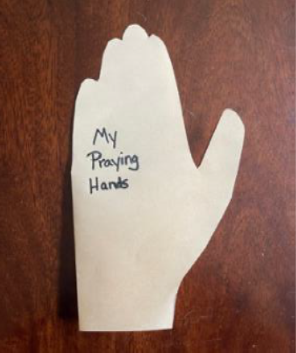
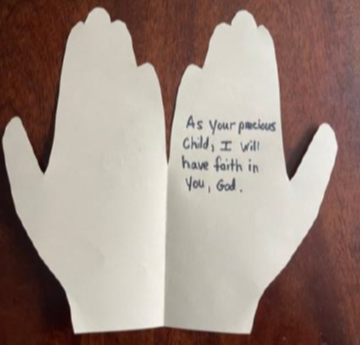
將一張美術紙以「漢堡摺法」對摺。讓孩子的左手小指放在摺痕處,手指併攏並朝上。用記號筆沿著手掌輪廓描繪。將手掌形狀剪下來,並確保小指與摺痕交界處不要被剪到。這樣一來,便會形成如圖所示、可摺疊的祈禱手勢。
在雙手的正面寫上「我的祈禱之手」。在內側,讓年長的孩子們寫下他們自己的信心禱告。至於年幼的孩子,則讓他們畫一幅祈禱圖畫,或由大人替他們寫下禱告語,亦可準備預先印好的禱告語,讓他們黏貼在「祈禱之手」的內側。例如:作為祢珍貴的孩子,我將信靠祢,上帝。
祝福
請孩子們跟著你重複說:「上帝,我會信靠祢。」向他們說明,每當你指向他們時,他們就應該重複這句話。請誦讀以下禱文:
上帝啊,感謝祢賜予這世界的一切美好祝福。我由衷地感到驚嘆,卻無法理解祢所創造之物的精妙之處。
(重點)上帝啊,我將信靠祢。
有時候,一想到自己該做的一切,我就感到應接不暇。畢竟我能力有限。
(重點)上帝啊,我將信靠祢。
有時候我會感到心煩意亂。總會發生一些不順心的事。感覺好像什麼事都不順利。
(重點)上帝啊,我將信靠祢。
有時候,我搞不清楚自己該做什麼,也不知道該做什麼選擇。人生有時真的讓人感到困惑。
(重點)上帝啊,我將信靠祢。
就像亞伯拉罕和撒拉一樣,我正試著聆聽祢的話。我知道我是祢珍貴的孩子,所以……
(重點)上帝啊,我將信靠祢。
阿們。