
Te mau rave'a no te haamoriraa
Hoho'a no te haamoriraa
Te tahi atu mau papa'iraa mo'a
Genesis 17:1-7, 15-16; Psalm 22:23-31; Mark 8:31-38
To'etū'ira'a
Items for Focus Moment: chair, book of scripture, small bell or chime, sign printed with “The End is Near”; a chair. Recruit three people of any age for the Focus Moment. These helpers can be chosen ahead of time or in the spirit of the moment.
Be ready to project or print the following scripture: Romans 4:13-25.
Te omuaraa
Manava
Piiraa ia haamori
All the ends of the earth shall remember and turn to the Lord, and all the families of the nations shall worship before him. For dominion belongs to the Lord. And he rules over the nations.
Rejoice, O my heart, and cry to the Lord, and say, “O Lord, I will praise you forever; my soul will rejoice in you, my God, and the rock of my salvation.”
—Psalm 22: 27-28; 2 Nephi 3:50, adapted
Himene arue
“Praise to the Living God” CCS 8
OR “A arue i te Atua o Aberahama” CCS 94
OR “Haere mai, oe te pu no te mau haamaitairaa atoa” CCS 87
A faaitoito i te mau piahi ia himene na roto i te tahi atu mau reo hau atu i ta ratou iho.
Pure haamataraa
Tāura'a
Te feruriraa Lenten
Last Sunday was the beginning of a five-Sunday journey through the Lenten season. Unlike the early disciples who didn’t seem to understand where the journey was heading, we do. But during Lent we have an opportunity to imagine ourselves on the same journey as the disciples, experiencing their excitement and at times their uncertainties. There were signposts along the way, not visible ones, but words that Jesus spoke to them. Let your Lenten reflections this week help you focus on signposts for your own journey as a disciple alongside Jesus Christ.
Te pureraa no te hau
Light the peace candle
Optional: have a volunteer ring a chime or bell three times
Tuʻaroʻa
Lent is a time that leads us to turn our focus inward, to think about where we are on the journey walking with Jesus. Week by week we remember parts of his journey in the last days of his earthly life and the courage it took for him to keep moving.
While we are not on the same kind of journey, we are walking as he did on this Earth that was created as a blessing to all creatures. While we do so we need to actively participate in helping to protect, preserve and restore this wonderful planet to be what God created it to be. In doing so we will be peacemakers.
Prayer
to be read aloud in unison adding an Amen at the end
“A tape'a mâmâ i te fenua” CCS 137
OR “Atua o te Hamaniraa” CCS 147
Te taime faatumuraa
Portrayal
Invite the three people chosen to participate to take their places: one on the chair with a book of scripture in hand, one holding the bell or chime, and one carrying the sign. The person with the bell or chime quietly rings it while slowly walking around the person on the chair. Alternatively, a person participating online could unmute and do this part by providing any audible distraction.
Meanwhile, the person seated continues to focus on reading. The person with the sign begins to circle around the seated person too, holding the sign so they can see it while the chiming, bell ringing or other sounds continue. The person seated keeps focusing completely on reading. After 2-3 minutes have elapsed signal to the participants to stop and return to their seats or mute again.
Tuʻaroʻa
That was an example of not letting anything disturb us. Sometimes outside events can arouse feelings of anxiety, fear, and uncertainty. We lose the ability to stay focused on God and God’s promises. We let disturbing things overwhelm our minds.
Scriptures can help guide us into refocusing by holding up how people encountered God through many generations. In Community of Christ, we hold the following Basic Belief about scripture:
Scripture is writing inspired by God’s spirit and accepted by the church as the normative expression of its identity, message, and mission. We affirm the Bible as the foundational scripture for the church. In addition, Community of Christ uses the Book of Mormon and the Doctrine and Covenants – not to replace the witness of the Bible or improve on it, but because they confirm its message that Jesus Christ is the Living Word of God. When responsibly interpreted and faithfully applied, scripture provides divine guidance and inspired insight for our discipleship.
—Sharing in Community of Christ, 4th Edition, Herald House, 2018, p. 36.
Hi'opo'araa i te mau papa'iraa mo'a
Display Romans 4:13-25 or refer to the printed or projected scripture. Allow two to three minutes for participants to read the scripture, then briefly discuss this question:
What does the scripture say to you about the faithfulness of God? about hope?
Poro'i i te po'ipo'i
Ia au i te Roma 4:13-25
Mā'ene'ene
Invite participants to take three deep breaths. Ask them to think about the message they just heard. What thoughts will they take with them into the coming week? What was something new to think about and remember? If time permits, after several moments to ponder, invite them to turn to a neighbor and share.
Te pahonoraa horo'a a te mau pĭpĭ
Tuʻaroʻa
God is the giver of life and hope. We can place our trust in God’s faithfulness toward us. We can respond to God’s generosity by being good stewards of creation and sharing our giftedness and resources.
Te haamaitairaa e te fariiraa i te mau tuhaa ahuru o te misioni i te fenua iho e na te ao nei
Hi'opo'araa Lenten: Te faarururaa i te mau fifi na roto i te mau rave'a apî
Te titau nei te Lent ia tatou ia faaiti i te vitiviti e ia haapa'o maitai, ma te horo'a i te vahi no te tauiraa. Ua riro te hi'opo'araa ei pure ohie no te hi'opo'a i te mahana e aore râ, te hepetoma e te Atua, ma te hi'opo'a eaha te mea tei horo'a mai i te ora, eaha te mea fifi, e ihea tatou e nehenehe ai e faaruru i te mau fifi o te oraraa na roto i te mau rave'a apî.
Te ti'aturi nei tatou e, te vai ra te Varua i roto i to tatou mau oaoa e to tatou mau fifi.
Te titau manihini nei au ia outou ia faaea rii noa, e ia huti i te aho hohonu, ma te faatumu i ni'a i to outou ara-maite-raa a ui atu ai au i teie mau uiraa:
Eaha ta outou e mauruuru nei i teie mahana? A hi'o i te mau taata, te mau taime, e te mau ô o tei horo'a ia outou i te ora.
A ani i te Atua ia tauturu ia outou ia hi'o i muri i to outou mahana e aore râ, to outou hepetoma ma te parau-ti'a, te aroha, e te hinaaro e ite.
Eaha te mau taime fifi, fifi, huru ê, e aore râ, mana'o-ore-hia? Eaha ta ratou i faatupu i roto ia outou?
Ihea outou i ite ai i te here, te taairaa, te itoito, te hau, e aore râ, te ti'aturiraa? Ihea outou i ite ai i te Varua i te ohipa?
Ihea outou paha i pahono ai ma te taa ê? Eaha te ravea apî no te faaruru i te hoê fifi e nehenehe e ravehia?
A faaore i te mau mea e ti'a ia outou ia faaru'e: te mauiui, te tatarahapa, te mata'u, e aore râ, te mau hi'oraa tahito. A vaiiho i te aroha ia tomo mai e ia haamata faahou.
A horoa i te mahana i mua nei i te Atua. A ani i te fariiraa i te mau rave'a apî e te itoito no te faaruru i te mau mea atoa e tae mai na roto i te here, te aroha, e te ti'aturiraa.
Te pure
Te Atua o te mau rave'a apî,
A tauturu ia matou ia hi'o i to matou oraraa ma te aroha e te parau-ti'a.
A faaite mai ia tatou i te vahi e nehenehe ai e rave i te mau ravea apî no te pahono mai.
A tauturu mai ia matou ia faaore i te mau mea o te ore faahou e horo'a i te ora e ia iriti ia matou i to outou hau.
A horo'a mai ia tatou i te itoito no te farerei ananahi ma te here, te ti'aturiraa, e te feruriraa.
Amene.
Hymn of Trust
“I Know Not What the Future Hath” CCS 246
OR “Standing on the Promises” CCS 257
A faaitoito i te mau piahi ia himene na roto i te tahi atu mau reo hau atu i ta ratou iho.
E nehenehe e itehia te mau huriraa no teie himene na roto i te reo Paniora e te reo Farani i: Herald House
OR “By Gracious Powers” CCS 268
A faaitoito i te mau piahi ia himene na roto i te tahi atu reo hau atu i ta ratou iho reo.
Unison Prayer
“I Have Decided to Follow Jesus” sing at least twice CCS 499
Read stanzas 1 and 3 aloud in unison. End with Amen.
Consider reading in multiple languages.
Hi'opo'araa
Te vahi mo'a: Hoho'araa no te haamoriraa a te pŭpŭ iti
Atu'ara'a
Manava
Te amui atu nei tatou e te tahi atu mau kerisetiano o tei faahanahana i te oro'a faafaaearaa e maha ahuru mahana i rotopu i te mahana toru rehu e te mahana Pasa, aita râ i tai'ohia i te mau sabati e rave rahi senekele te maoro. A haamana'o ai tatou i to ' na oraraa e to ' na taviniraa, e faatumu tatou i to tatou ara - maite - raa i nia ia Iesu i te tau faafaaearaa. Te horoa atoa ra te Lent i te hoê ravea no te faarahi i to tatou ara - maite - raa i nia i to tatou iho oraraa i roto i te taairaa e o Iesu. E te faaitoito nei te pu'e tau Lenten ia tatou ia faaru'e i te mau mea atoa o te haafifi e aore râ, o te haafifi i to tatou fafauraa ia riro ei pĭpĭ. Ia tauturu te pu'e tau faafaaearaa ia tatou ia haere e o Iesu, noa'tu e, te arata'i nei te e'a i ni'a i te satauro.
Te pureraa no te hau
A faata'i mǎrû i te hoê ti'o aore râ, a faata'i mǎrû e toru taime.
A tutui i te mori hinu hau.
God of lightness and darkness, peace in our world today may seem unreasonable, far-fetched, ludicrous. Also ridiculous was the thought that Abram and Sarah might have a son. Yet, their descendants now number as many as the stars. God, we know you are capable of the most unlikely things, and we praise you for that! You create something of nothing—every day! We trust that you are working in the world, shining peace into the world like stars in the night sky.
May we pause to see the stars, to see the peace, which you create daily. And then, may we join you. May we be so bold as to work to create something from nothing—and may we see that there is already a peaceful-something, even in the most ludicrously nothing places. In the name of Jesus, our north star. Amen.
Te ohipa pae varua
Te faaohiparaa i te mamû noa
I te omuaraa, e nehenehe e riro ei mea fifi ia vai mamû noa. E nehenehe te feruriraa e ino roa. A vaiiho ia outou iho ia farii i teie ohipa. E haamata tatou ia tata'i ana'e au i te reo. E mamû noa tatou e pae minuti. E faata'i faahou vau i te reo no te faaoti i to tatou taime maniania ore.
A haamana'o i te huti hohonu i te aho. E nehenehe te faatumuraa i nia i te hutiraa aho tataitahi e tauturu i te tamǎrû i te feruriraa. A ite i te mau mea e haaati ra ia outou; a hi'o i te huru o te mata'i i ni'a i to outou iri; a ti'aturi e, tei roto outou i te aro o te Mo'a—te haaati ra ia outou e te tauahi nei ia outou. A vaiiho i ta outou mau aparauraa i roto ia outou ia tapea no te hoê taime. A faaea hope roa i piha'i iho i te Taata e vai ra i piha'i iho ia outou.
A faata'i i te reo no te haamata.
A tatari e pae minuti.
A faata'i i te reo no te faaoti i te tau maniania ore.
A ui: Eaha te mana'o o te parahiraa i mua i te Atua ma te maniania ore?
Adapted from a Guide for Lent
Te faaiteraa i ni'a i te airaa maa
Roma 4:13–25
13 For the promise that he would inherit the world did not come to Abraham or to his descendants through the law but through the righteousness of faith. 14 For if it is the adherents of the law who are to be the heirs, faith is null and the promise is void. 15 For the law brings wrath, but where there is no law, neither is there transgression.
16 For this reason the promise depends on faith, in order that it may rest on grace, so that it may be guaranteed to all his descendants, not only to the adherents of the law but also to those who share the faith of Abraham (who is the father of all of us, 17 as it is written, “I have made you the father of many nations”), in the presence of the God in whom he believed, who gives life to the dead and calls into existence the things that do not exist.18 Hoping against hope, he believed that he would become “the father of many nations,” according to what was said, “So shall your descendants be.” 19 He did not weaken in faith when he considered his own body, which was already as good as dead (for he was about a hundred years old), and the barrenness of Sarah’s womb. 20 No distrust made him waver concerning the promise of God, but he grew strong in his faith as he gave glory to God, 21 being fully convinced that God was able to do what he had promised.22 Therefore “it was reckoned to him as righteousness.” 23 Now the words, “it was reckoned to him,” were written not for his sake alone 24 but for ours also. It will be reckoned to us who believe in him who raised Jesus our Lord from the dead, 25 who was handed over for our trespasses and was raised for our justification.
—Romans 4:13-25 NRSVue
The phrase “hoping against hope,” which sometimes is used to suggest clinging on even when all seems hopeless, originates from verse 18 of today’s scripture and is central to its message. In Abraham, we meet an extraordinary person who had faith in a God who promised the impossible and then did it. God declared to Abraham, “I have made you the father of many nations.”
Such a promise would be challenging for anyone to grasp and accept. But with Abraham, who was almost 100 years old and whose wife, Sarah, was barren, it would have been beyond belief.
Abraham inherited the promise made to him by God, not because he adhered to the law, but because of solid and consistent faith in the face of much evidence to the contrary that what God had promised would come to pass. Abraham believed in hope—a hope that saw beyond the circumstances to rest on the promises and ability of God.
While the focus is on Abraham in this chapter, Paul concludes that Jesus, who was crucified because of human evil, was raised for our justification—that we might become one with God through our faith. Just as it was “reckoned unto Abraham,” so will it be reckoned unto us…those who believe in God.
As we continue this Lenten journey of self-reflection and preparation, perhaps it is best to focus not on the cross, but on the resurrection, new life, and “hope against hope” that God has promised, if only we will have faith. God had promised Abraham he would become the father of many nations. Indeed, this was impossible. Jesus told his disciples he would be killed and rise again on the third day. Indeed, this was impossible. Unless you believe in a God of the impossible, that is.
Te mau uiraa
- Abraham believed in hope. Who in your life would you consider as models of Abraham’s faith and hope?
- Think of a time when you clung to hope when all seemed hopeless. How did your faith in God help you through that time?
- What are your hopes today, and how is faith present in this hope?
Te tonoraa
Faahaparaa no te horo'a
E te pŭpŭ here o te Mesia, eiaha e paraparau e e himene noa no ni'a ia Ziona. A ora, a here, e a faaite mai ia Ziona: te feia e tamata ra i te riro ei hoê i roto i te Mesia, e aita e veve e aore râ, tei hamani-ino-hia i rotopu ia ratou.
—Te Haapiiraa e te mau Faufaa 165:6a
E roaa te ete ô mai te mea e, e hinaaro outou e paturu i te mau faatereraa tamau e te mau pŭpŭ iti ei tuhaa no ta outou pahonoraa horo'a.
Ua ravehia te pure horo'araa no te Lent no roto mai i te pahonoraa horo'a a te hoê pĭpĭ:
E te Atua e vai noa ra, a faaore mai na ia matou ia iti a'e matou i te here, i te ti'aturiraa, e i te mea ta oe i hamani ia matou. Tei pihai iho noa to outou aroha e to outou aroha ia matou. Ia ite matou i te puai i mua ia outou, e ia pahono mai matou i to outou here ma te varua horo'a. Amene.
Te titau-manihini-raa i te putuputuraa i muri iho
Himene hopea
Community of Christ Sings 244, “There’s an Old, Old Path”
Pure hopea
Te mau taa-ê-raa ia au i te pŭpŭ
Te oro'a no te Amuraa maa a te Fatu
No te mea ho'i e, ua farii au na roto mai i te Fatu i ta'u i horo'a atu ia outou, oia ho'i, ua rave mai te Fatu o Iesu i te hoê faraoa i te po a tuuhia'i oia, e i muri a'e i to'na haamauruururaa, ua ofati oia i te reira, e ua parau atura, " Teie to'u tino no outou, a rave i te reira ei haamana'oraa ia'u. I muri a'e i te amuraa maa, ua rave atoa oia i te au'a, na ô maira, " Teie te au'a, o te fafauraa apî ïa i roto i to'u toto: a rave i te reira, i te mau taime atoa e inu ai outou i te reira, ei haamana'oraa ia'u. Ia amu ana'e outou i teie pane e ia inu ana'e outou i te au'a, te faaite nei outou i te poheraa o te Fatu e tae roa'tu i to'na hoeraa mai.
—1 Korinetia 11:23–26
Faahaparaa no te amuiraa
E fariihia te mau taata atoa i ni'a i te airaa maa a te Mesia. Ua riro te Amuraa maa a te Fatu, e aore râ, te Amuraa maa, ei oro'a e haamana'o ai tatou i te oraraa, te poheraa, te ti'a-faahou-raa, e te vairaa tamau o Iesu Mesia. I roto i te Oire no te Mesia, te ite atoa nei tatou i te amuiraa mai te hoê rave'a no te faaapî i ta tatou fafauraa bapetizoraa e no te haamauhia ei mau pĭpĭ o te ora nei i te misioni a te Mesia. E nehenehe te tahi atu mau taata e farii i te mau ite taa ê aore ra e taa ê atu â i roto i to ratou mau peu tumu faaroo. Te titau manihini nei matou i te mau taata atoa e amui atu i roto i te Amuraa maa a te Fatu ia rave i te reira na roto i te here e te hau o Iesu Mesia.
Te amui nei tatou i roto i te amuiraa ei faaiteraa i te haamaitairaa, te faaoraraa, te hau, e te huiraatira.
No te faaineine ia tatou, a himene na roto mai i te mau himene a te Mesia ( ma'iti i te hoê):
515 “Te haamana'o nei tatou i teie mau taime”
516 “Te putuputuraa no te inu i te uaina e te pane”
521 “E ofati amui tatou i te pane”
525 “E mea na'ina'i te airaa maa”
528 “A amu i teie pane”
Te haamaitairaa e te taviniraa i te pane e te uaina.
Te mau mana'o no te mau tamarii
This Lenten activity continues through the season of Lent.
E mea titauhia ia outou:
- A tata'i i te pepa
- Te mau raau glue
- Last week’s papers cut into thin strips
Before this meeting, cut the paper used last week into small strips.
E hamani te mau melo o te piha haapiiraa i te hoê ohipa rima î o te faaite i ta ratou tere Lenten i te roaraa o te tau faafaaearaa. A ineine no te titau i te mau ohipa rima î i te mau hepetoma atoa. A haapapû e, te vai ra te tahi atu mau ohipa rima î i roto i te mau tuhaa e rave rahi o te faaotiraa no te mau melo o te ere i te hoê aore ra e piti hepetoma.
Say: Today is the second Sunday in Lent. Lent is a time when we prepare for Easter by intentionally taking time to grow our relationship with God. We can deepen our relationship with God in many ways, but three are especially important during Lent: fasting, praying, and almsgiving. Last week we talked about fasting.
Ask: Does anyone remember what fasting is?
Say: This week, we are going to talk about prayer. There are many ways to pray. No matter how you pray, it is important to create safe space around you or within you where you can spend time with God. Today, we are going to create a visual reminder of a safe space so we can remember how important it is.
Last week you brainstormed things you could fast from during Lent and then colored over those things. I took your papers and cut them into fine strips. We are going to glue these fine strips on a new piece of paper in the shape of a nest. You get to decide what your nest looks like and how many strips of paper you need to make it.
While participants are using glue sticks and paper strips to create nests on their papers, talk about ways we can create space for God.
Say: Once you have created your nest, write your name on the back of your paper and hand it to me. I will keep the papers until next week, when we continue to add to our art.
This week, see how you intentionally can create space in your life for God.
Te tauturu nei te A'oraa
Te hi'opo'araa i te mau Papai
The phrase “hoping against hope,” which is sometimes used to suggest clinging on even when all seems hopeless, originates from verse 18 of today’s scripture passage and is central to its message. In Abraham, we meet an extraordinary person who had faith in a God who promised the impossible and then did it. God declared to Abraham, “I have made you the father of many nations” (v.17). Such a promise would be challenging for anyone to grasp and accept. But, with Abraham, who was almost 100 years old and whose wife Sarah was barren, it would have been beyond belief. Yet, we are told Abraham “did not waver concerning the promise of God, but he grew strong in faith as he gave glory to God, being fully convinced that God was able to do what he had promised” (vv. 20–21).
Paul presents Abraham as the Father of All Believers. Abraham inherited the promise made to him by God, not because he adhered to the law, but because of solid and consistent faith—in the face of much evidence to the contrary—that what God promised would come to pass. Abraham believed in hope, a hope that saw beyond the circumstances to find rest on the promises and ability of God.
Paul’s intent is not to place Abraham on a pedestal. He does not imply Abraham was a perfect person who never doubted. What is portrayed is a man whose attitude was consistently one of faith and hope in the promise of God.
In the opening chapter of Romans, Paul describes a human race that has ignored, dishonored, and failed to worship God. In contrast, in Romans chapter 4, we find Abraham, one who is called to undo humankind’s sin by believing in God as creator and life-giver (v. 17) and by trusting in God’s promises (v. 19). However, we must recognize that it is through Jesus Christ, not Abraham, that humankind is saved.
While the focus is on Abraham in this chapter, Paul concludes that Jesus, who was crucified because of human evil, was raised for our justification—that we might become one with God through our faith. If our goal is justification, then Abraham provides a worthy signpost towards it, but it is only in Jesus that the goal is reached. As theologian Tom Wright explains, “Abraham believed that God would give life where there was none. Christians believe that God raised Jesus from the dead. In both cases, it can only be a recognition that God is God, that our life and the life of the world are in God’s hand, that God has already begun the new creation and invites us to trust God to carry it through to the end.”
“Hoping against hope, he believed…” (v.18). God had promised Abraham he would become the father of many nations. Indeed, this was impossible. Jesus told his disciples he would be killed and rise again on the third day. Indeed, this was impossible. Unless you believe in a God of the impossible, that is.
Te mau mana'o rahi
- Abraham inherited the promise made to him by God, not because he adhered to the law, but because of solid and consistent faith.
- Abraham believed in the hope that sees beyond circumstances to find rest on the promises and ability of God.
- If our goal is to become one with God, then Abraham provides a worthy signpost towards this goal, but it is only through Christ the goal will be reached.
Te mau uiraa no te taata orero
- Think of a time when you clung to hope when all seemed hopeless. How did your faith in God help you through that time?
- What do you hope for right now, and what part does faith play in this hope?
- Abraham believed in hope. Who are the people in your life you would consider believers in hope?
- Jesus was raised for our justification. What do you understand by this?
Te mau haapiiraa
Haapiiraa paari
Haatumu i ni'a i te mau papa'iraa mo'a
Roma 4:13–25
Te haapiiraa
Ua riro te faaroo ei haamaitairaa a te Atua.
Ngā opuaraa
E...
- hi'opo'a i te irava o te Roma 4:13–25.
- a horo'a i te a'oraa a Paulo no ni'a i te faaroo.
- hi'opo'a i te mau pahonoraa haapa'o maitai a Aberahama.
- A hamani i te hoê faanahoraa no te arata'i i te mau taata i roto i te auhoaraa no te tauturu ia ratou ia ite i te faaroo ta te Atua i haamau i roto ia ratou.
Ngā tao'a
- Self-Survey questions (Gather section)
- Te mau pene e aore râ, te mau pene
- Te mau Bible e aore râ, te mau ve'a nene'ihia no te Roma 4:13–25 no te mau melo tata'itahi o te piha haapiiraa
- Te himene nei te pŭpŭ a te Mesia ( CCS )
Faaite i te orometua haapii
No te faaineine ia outou no teie haapiiraa, a tai'o i te Roma 4:13–25 i roto i te A'oraa e te mau tauturu no te piha haapiiraa, Matahiti B: Te Faufaa Apî (ma te faatumu i ni'a i te mau rata) , pp. 53–54 Herald House .
Parau mau
After welcoming attendees, distribute copies of the self-survey (below) and pencils or pens as needed. Inform them that this is only for themselves and won’t be shared. Invite them to keep and use the survey page to make notes of anything explored today they want to remember. Allow 2–3 minutes to complete the self-survey.
A tufa i te mau Bible aore ra te mau buka neneihia o te mau irava Roma. A tai'o ai outou i te Roma 4:13–25, a ani i te mau melo o te piha haapiiraa ia hi'opo'a i ta ratou mau pahonoraa i te uiuiraa, ma te faaroo i te mau hi'oraa no ni'a i te mau uiraa o te uiuiraa. A ani ia ratou ia pee ma te maniania ore a tai'o ai outou.
Uiuiraa ia ' na iho
Parau mau e aore râ, Hape:
- Hou te Atua a faaite ai i te hoê fafauraa ia Abrama (Aberahama) no ni'a i te mau huaai, ua horo'ahia te ture o te fafauraa i te nunaa i roto i te buka Genese.
- Ua riro te " ture " ei tumu no to tatou ti'amâraa.
- E arata'i te faaroo i to tatou haapa'oraa e e faaûru te reira.
- Te faaite nei te haereraa ' tu tatou iho no te opua i te mau rave'a apî no te " riroraa ei ekalesia " i te ereraa i te faaroo.
- No te Aposetolo Paulo, te tumu no te faaroo, o te Atua ïa e mana to'na no te upooti'a i ni'a i te pohe.
Tā'amu'amu
Te uiui nei te hoê taata aravihi i te pae no te roro i teie uiraa: Eaha te mea i tae mai na mua roa, te moa aore ra te hua manu? Te faaite ra te taioraa i teie irava no ǒ mai i te mau Roma i te hoê huru feruriraa mai te reira te huru, aita râ i horoa i te reira ei uiraa, ei pahonoraa aore ra ei ohipa mau.
Ua faauehia te mau ati Iuda ia faarue i Roma e rave rahi matahiti hou a papai ai o Paulo i teie rata. Te vai ra te mau haapapûraa e ua faaorehia te faaueraa o tei opani i te mau ati Iuda ia haere mai i Roma i te taime a papai ai o Paulo. Ua riro te mau Kerisetiano Etene ei feia matau - maitai - hia i roto i te huiraatira o te ekalesia apî i roto i te mau matahiti i ropu. Ua faatupu paha te reira i te mau arepurepuraa e te mau arepurepuraa a ho'i mai ai te mau ati Iuda no te amui faahou atu i roto i te amuiraa.
I roto i teie rata, ua faataa o Paulo i te mana'o e ua riro na pǔpǔ feia faaroo e piti—te mau ati Iuda e te mau Etene—e mau herehere no Aberahama: te hoê na roto i to ' na huaai i te pae tino, e te tahi na roto i te riroraa ei “tamarii” na Aberahama na roto i te hoê ravea faahoho'araa.
- Ia au i te irava i roto i te Roma, eaha te mea na mua roa ia Aberahama, te ture aore ra te faaroo? ( Te vai ra te fafauraa no ni'a i te huaai o Aberahama i roto i te Genese pene 15; te vai ra te ture i roto i te pene 17 ).
- No te aha paha o Paula i haapapu ai i teie mana'o?
- Ahiri te ture i haamauhia na mua roa, eaha ïa te taa - ê - raa i rotopu i te mau Kerisetiano Etene?
- Ia au i te parau a Ian S. Markham, ua parau o Paul i ni'a i te ohipa i tupu i ni'a ia Aberahama e: “... te faaroo i te fafauraa, o te ti'aturiraa matamua ïa a te Atua i ni'a i te huitaata nei” ( Te oro'a i ni'a i te Parau, Matahiti B, Buka 2 ). Eaha paha te auraa o te reira i teie mahana?
Fa'aitoito
E mea pinepine tatou i te haamana'o i te aamu o Aberahama ma te mana'o e, ua aueue roa to'na ti'aturiraa i te fafauraa a te Atua—e riro mai oia ei metua tane no te mau nunaa e rave rahi (e ere hoê noa fenua). Te mana'o nei au e ehia to ' na matahiti. Ua ite oia e ua atea roa o Sarah i te matahiti no te fanau. Ua tamata atoa oia i te faatupu i te hoê ei arii na roto i te hoê tavini no te fanau i te hoê tamarii na ' na. E ere paha te reira i te mau ohipa a te hoê taata e tiaturi ra e e faatupu te Atua i te mau mea i fafauhia. Ua papa'i o Paula i roto i te mau irava 19–20 e, "Aita oia i paruparu i roto i te faaroo... Aita hoê a'e ti'aturiraa i faatupu ia'na i te hepohepo".
Te ui nei te taata tuatapapa ra o Jeff Paschal e: “Te hi'o ra anei o Paula i te faaroo o Aberahama... ei mea puai e te aueue ore, eiaha no te mea e aita roa ' tu oia e feaa ra, eiaha no te mea e aita roa ' tu oia e tamata ra i te faatere i te mau mea, no te mea râ e ua tiaturi o Aberahama i te mau fafauraa a te Atua no te faaruru i te mau fifi e no te haere i mua ma te faaroo.” (Ta David L. Bartlett e o Barbara Brown Taylor, te mau papa'iraa. Te oro'a i ni'a i te parau, Matahiti B, Buka 2 , 2008), 67)
I mua:
- Nahea teie tatararaa ia tauturu ia tatou ia ite i te reira:
- “Te titau nei te Atua i te hoê ekalesia itoito o te faaruru i te mau fifi e o te ti'aturi, maoti râ i te ora i te hoê oraraa taa ê i te pae varua no te tamata noa i te ore e rave i te mau hape.” (Jeff Pasa) e te reira
- "E mea faufaa roa te mau fifi e te mau rave'a. E vai noa anei outou ma te feaa i roto i te mǎrû o to outou mau mata'u, te mau mana'o papû ore, e te mau taiva ore? E aore râ, e haere anei outou i mua i roto i te maramarama o to outou piiraa e to outou hi'oraa i horo'ahia mai e te Atua?" (Te mau Haapiiraa e te mau Faufaa 164:9e)
- Te parauhia ra e te Atua ana'e te nehenehe e faatupu i te faaroo no te mea e ô te reira. Te farii ra anei outou aore ra aita? Nō te aha?
- Eaha te mau rave'a ta te huiraatira o te ekalesia e nehenehe e farii no te aupuru i te mau faaûruraa o te faaroo i roto i te feia imi e te feia faaroo tei bapetizohia aore râ tei haapapuhia apî?
A ani i te mau melo o te piha haapiiraa ia hi'opo'a faahou i te uiuiraa mana'o, ma te taui i ta ratou mau pahonoraa ia au i te mau aparauraa o teie mahana. (Mai te mea e, e ui mai ratou, o te mau pahonoraa ïa: 1-F, 2-T, 3-T, 4-F, 5-T).
Tuku
A faaitoito i te mau piahi ia haamau i te mau pŭpŭ e piti aore râ, e toru taata.
- A ani ia ratou ia faaite i te hoê mana'o no ni'a i te huru no te titau manihini i te tahi atu mau taata ia amui atu i roto i te amuiraa. A faahaamana'o ia ratou i teie tuhaa o te pure misionare: “A horo'a mai ia'u i te itoito no te faaruru i te hoê mea apî.”
- A ani ia ratou ia feruri eaha te huru o te reira i roto i te huru o ta outou amuiraa. A horo'a i te taime e navai ia nehenehe i te mau pŭpŭ tata'itahi ia faaite i ta ratou mau mana'o.
Tapu
A himene e aore râ, a tai'o amui i te “Ma te faaroo papû” CCS 649.
A tai'o i te parau tumu tamau: Te faahoturaa i te mau pĭpĭ no te tavini na roto i te amuiraa i roto i te huiraatira o te Mesia , 4raa o te nene'iraa, 2018, p 23.
A faaineine i te mau pĭpĭ no te tavini — A faaineine i te mau taata no te misioni a te Mesia
Ua ineine tatou no te faaineine i te mau tane, te mau vahine, e te mau tamarii ia riro ei mau faaiteraa mau e te ora no te oraraa, te taviniraa, e te vairaa tamau o te Mesia i roto i te ao nei.
Lesoni no te Feia Apî
Haatumu i ni'a i te mau papa'iraa mo'a
Roma 4:13–25
Te haapiiraa
A faaroo i te mau fafauraa a te Atua.
Ngā opuaraa
E...
- A hi'opo'a i te auraa o te faaroo na roto i te haamana'oraa i te aamu o te fafauraa a te Atua ia Aberahama e o Sara mai te au i te irava papa'iraa mo'a o teie mahana.
- a feruri i to ratou faaroo i roto i te mau parau e mea fifi roa ia tiaturi.
- a hi'o na i te pureraa i te pure misionare ei ohipa itoito e te faaroo.
Ngā tao'a
- Te tapo'i i te mata
- Te hoê tao'a nainai
- Bible, Bible a te mau tamarii o te ao nei, mai te mea e, e vai ra
- Pepa, pene, e aore râ, pene
Faaite i te orometua haapii
No te faaineine ia outou no teie haapiiraa, a tai'o i te Roma 4:13–25 i roto i te A'oraa e te mau tauturu no te piha haapiiraa, Matahiti B: Te Faufaa Apî (ma te faatumu i ni'a i te mau rata) , pp. 53–54 Herald House .
Parau mau
A ani i te hoê taata horo'a itoito ia amui atu ia outou i mua i te piha. A tapo'i i te mata o te piahi. A ui i te rima tauturu: Te mǎta'u ra anei oe? A ui i te toea o te piha haapiiraa: Te mana'o ra anei ratou e te mǎta'u ra ratou? Nafea outou ia ite? I muri iho, a ani i te taata horo'a ia hamama rahi i to ratou vaha. A ui faahou: Te haapeapea ra anei oe i teie nei? I muri iho, a tuu i te tao'a i ni'a i to ratou arero. A vaiiho ia ratou ia tatara i te tapo'i mata e a ui i te mau uiraa i muri nei:
- Eaha to outou mana'o i te peeraa matapo i te mau faaueraa?
- E pee anei outou i taua mau faaueraa ra ahiri e ua horoa te hoê taata ê i te mau faaueraa?
- Nahea outou ia ite i te taime e mea paruru ai ia pee i te mau faaueraa a te hoê taata e te taime eita e ti'a ai?
- Eaha te auraa ia farii i te faaroo?
Te haapiiraa no teie mahana, no ni'a ïa i te faaroo i te Atua noa'tu te mau faaueraa a te Atua e au ra e mea maamaa roa.
Tā'amu'amu
Te vai ra te irava mo'a no teie mahana i roto i te buka a Roma; te faahiti ra te reira i te hoê aamu i papa'ihia e rave rahi hanere matahiti na mua'tu i roto i te Faufaa Tahito. E mea ti'a ia tatou ia ite i te aamu o Aberahama e o Sara no te ite i te irava papa'iraa mo'a o teie mahana.
A ani i te mau piahi ia faaite i te mau mea ta ratou i ite no ni'a ia Aberahama e o Sara. I muri iho, a horoa i te mau haamaramaramaraa i erehia i roto i teie hi'opo'araa:
Te vai ra te aamu no ni'a i te fafauraa a te Atua ia Abrama e ia Sarai (ua taui te Atua i to raua i'oa ia Aberahama e ia Sara) i roto i te Genese pene 15 e tae atu i te 17. Ua faaau te Atua i te hoê fafauraa ia Abrama ma te parau e, e riro mai oia e o Sarai ei metua tane e ei metua vahine no te mau nunaa e rave rahi, e e rahi a'e to raua huaai i te mau fetia atoa o te ra'i. I muri iho ua taui te Atua i to ratou mau i'oa. E haapararehia te faaauraa a te Atua e ratou i nia i to ratou mau huaai atoa. Te fifi, oia ho'i ïa, ua ruhiruhia roa o Aberahama raua o Sara (i te hopea o to raua mau matahiti 90) e aita ta raua e tamarii. E mea fifi roa ia tiaturi i te fafauraa a te Atua. Ia au i te parau faaau, e peritomehia te mau tane atoa ei tapao no teie tiaturiraa i te fafauraa a te Atua. Ua faaroo o Aberahama i te Atua e ua rave oia mai ta ' na i fafau ma te peritome i te mau tane atoa o to ' na utuafare, e tae noa ' tu oia iho.
I te matahiti i muri iho, ua fanau o Aberahama raua Sara i te hoê tamaiti, o Isaaka. Ua tupu te fafauraa a te Atua ia Aberahama raua ia Sara na roto i te huaai o Isaaka. Te parau mau, te vai ra i roto i te huaai o Aberahama te feia e faaroo ra i te haapaoraa ati Iuda, te faaroo kerisetiano, e te faaroo islama. No Iesu te huaai o Aberahama.
Mai te mea e, e vai ra, a tai'o i te Roma 4:13–25 no roto mai i te Bible a te mau tamarii o te ao nei.
- E ere na roto i te ture i farii ai o Aberahama raua Sara i te fafauraa e riro raua ei metua no te hoê nunaa taatoa. Na roto i te aha?
- Eaha te fafauraa a te Atua ia tatou?
- Nafea tatou ia faaite i te faaroo i te Atua?
Ua faauehia te nunaa ati Iuda ia faarue i Roma e rave rahi matahiti hou a papai ai o Paulo i teie rata. Te vai ra te mau haapapûraa e ua faaorehia te faaueraa o tei opani i te huiraatira ati Iuda ia haere mai i Roma i te taime a papai ai o Paulo. Ua riro te mau Kerisetiano Etene ei feia matau - maitai - hia i roto i te huiraatira o te ekalesia apî i roto i te mau matahiti i ropu. Ua faatupu paha te reira i te mau arepurepuraa e te mau arepurepuraa a ho'i mai ai te mau ati Iuda no te amui atu i roto i te amuiraa.
I roto i teie rata, ua faataa o Paulo i te mana'o e ua riro na pǔpǔ feia faaroo e piti—te mau ati Iuda e te mau Etene—e mau herehere no Aberahama: te hoê na roto i to ' na huaai i te pae tino, e te tahi na roto i te riroraa ei “tamarii” na Aberahama na roto i te hoê ravea faahoho'araa.
Fa'aitoito
A haamata i te hoê tauaparauraa no ni'a i te auraa o te ti'aturiraa i te hoê mea e au ra e mea fifi roa ia ti'aturi na roto i te faaiteraa i te tahi o teie mau "Mau mea fifi roa ia ti'aturi". A ani i te mau piahi ia faaite i te tahi mau mea ta ratou i faaroo. A tauaparau e o vai ta ratou e fifi ra i te ti'aturi e no te aha e nehenehe ai e riro ei mea fifi ia ti'aturi i te tahi mau mea.
- Te mau toparaa rahi roa ' ' e o te uira i roto i te united states, o te mau squirrels ïa. Te mau taime maitai roa ' ' e o te matahiti no te “aroraa i te mau aiû” i nia i te mau reni uira, o te ava'e me ïa e tae atu i te ava'e tiunu e te ava'e atopa i te ava'e novema.
- Na roto i te taioraa i te mau reo o te hoê cricket, e nehenehe ta outou e ite i te anuvera o vaho. E ite outou i te anuvera fatata i roto i te mau teteri Fahrenheit mai te peu e e taio oe ehia rahiraa taime e ta'i ai te hoê cricket i roto i te 15 tetoni e i muri iho e amui atu e 37.
- E mau taea'e e tuahine (afa taea'e e tuahine) te mau tamarii a te mau mahaha hoê â huru, eiaha râ te mau fetii fetii.
- E navai te mau parau papa'i i te matahiti hoê (fatata hoê miria buka) no te tapo'i i te ao nei 1,200 taime na roto i te hoo o Costco.
- E nehenehe te otare iti roa ' ' e i itehia a'enei e tomo na roto i te mata o te hoê arapoa. Te otare Angustopila , tei itehia i te matahiti 2014, e 0.03 tenetimetera (aore ra 0.86 milimetera) te teitei. Hoê ahuru o ratou o te nehenehe e tomo i roto i te mata o te hoê arapoa i te hoê â taime.
- E tupu oioi roa te tumu raau e tupu oioi roa ' ' e i nia i te fenua nei, e te faitohia ra te reira i roto i te mau kilometera i te hora. Ia au i te mau parau faataa a te Ao nei, e nehenehe te bamboo e pupuhi e 35 tenetimetera i te mau mahana atoa i te hoê vitiviti e 0.00002 kilometera i te hora.
—Adapted from bestlifeonline.com/crazy-interesting-facts/
Te na ô ra te mau irava 19–20 e: “Ua feruri o Aberahama i teie mau mea atoa. Aita râ to'na faaroo i te Atua i ino. Aita roa'tu oia i feaa e, e tape'a te Atua i te fafauraa [a te Atua]. Aita roa'tu o Aberahama i tape'a i te ti'aturi. Ua puai a'e to'na faaroo e ua arue oia i te Atua.”
- I to oe mana'oraa, no te aha o Aberahama i tiaturi ai i te Atua?
- Eaha te faito o te tiaturiraa tei niuhia i nia ia vai te faaite mai ia tatou aore ra i reira te haamaramaramaraa e noaa mai ai? No te aha mea faufaa ai te reira?
Tuku
Ua riro te pure no te misioni ei pure no te faaroo. Ia pure ana'e tatou, te ani nei tatou i te Atua ia arata'i ia tatou i te vahi e rave ai te Varua o te Atua i te ohipa ia nehenehe ia tatou ia riro ei tuhaa no taua ohipa ra. Te ani nei te reira i te itoito no te atâta e no te rave i te ohipa no te Atua. Noa ' tu e mea ohie roa ia tatou ia faahiti faahou i teie pure, o te hoê ïa pure no te itoito e te faaroo na mua ' ' e.
A feruri na i te pureraa atoa o Aberahama e o Sara i te hoê huriraa o te pure misionare. E nehenehe te reira e tupu mai teie te huru:
E te Atua, e arata'i to oe Varua ihea i teie mahana?
Help us be alert and ready to respond.
Give us courage to trust you and give us faith to respond.
Help us become a blessing of your love and peace for the descendants which you’ve promised us.
Amene.
A faaohipa e piti minuti no te papa'i i te hoê pure misioni no to outou oraraa. Eaha ta outou pure?
Tapu
No te feia e tamǎrû ra, a ani i te mau melo o te piha haapiiraa ia faaite i ta ratou mau pure no te misioni no te faaoti i te taime no te piha haapiiraa.
Te haapiiraa a te mau tamarii
Haatumu i ni'a i te mau papa'iraa mo'a
Roma 4:13–25
Te haapiiraa
A faaroo—mai ia Aberahama e o Sara—i te fafauraa a te Atua.
Ngā opuaraa
E...
- a tai'o e a haapii no ni'a i te aamu o Aberahama e o Sara.
- a amui atu i roto i te hoê faanahoraa faaroo.
- A hamani i te mau rima pure e te mau pure faaroo.
Ngā tao'a
- Te hoê tao'a nainai
- Te mau tapo'i mata (e navai no te afaraa o te piha haapiiraa)
- Bibilia e aore râ, aamu Bibilia, Matahiti B , na Ralph Milton, tei hoho'ahia e Margaret Kyle (Te mau hoho'a no te Roto Wood, 2008, ISBN 9781551455648); e te Bibilia Aamu, Matahiti A , na Ralph Milton, tei papa'ihia e Margaret Kyle (Te mau hoho'a no te Roto Wood, 2007, ISBN 9781551455471)
- Te mau parahiraa (e navai no te afaraa o te piha haapiiraa)
- Pepa paturaa (1 pepa i te tamarii hoê)
- Te mau tapa'o
- Bibilia
Te mau faahi'oraa i te orometua haapii
No te faaineine ia outou no teie haapiiraa, a tai'o i te Roma 4:13–25 i roto i te A'oraa e te mau tauturu no te piha haapiiraa, Matahiti B: Te Faufaa Apî (ma te faatumu i ni'a i te mau rata) , pp. 54–54 Herald House .
Parau mau
A ani i te hoê taata horo'a itoito ia amui atu ia outou i mua i te piha. A tapo'i i te mata o te tamarii i te hoê tapo'i mata. A ui i te tamarii: Te mǎta'u ra anei oe? A ui i te toea o te piha haapiiraa: Te mana'o ra anei ratou e te mǎta'u ra ratou? Nafea outou ia ite? I muri iho, a faaue i te tamarii ia toro i to ratou arero. A ui faahou: Te mǎta'u ra anei oe? A tuu i te maa i roto i to ratou rima e a ani ia ratou ia tamata i te reira. ( A hi'o na: A haapao maitai i te mau taa-ê-raa atoa o te maa.) A vaiiho ia ratou ia tatara i te tapo'i mata e a ui i te mau uiraa i muri nei:
- Eaha to outou mana'o i te peeraa matapo i te mau faaueraa?
- E pee anei outou i taua mau faaueraa ra ahiri e ua horo'a te hoê taata ê i te mau faaueraa—eiaha râ vau?
- Nahea outou ia ite i te taime e mea paruru ai ia pee i te mau faaueraa a te hoê taata e te taime eita e ti'a ai?
Te haapiiraa no teie mahana, no ni'a ïa i te faaroo i te Atua noa'tu te mau faaueraa a te Atua e au ra e mea maamaa roa.
Tā'amu'amu
Te vai ra te mau papa'iraa mo'a no teie mahana i roto i te buka a Roma, i roto i te Faufaa Apî. Teie râ, te faahiti ra te reira i te hoê aamu i papaihia e rave rahi hanere matahiti na mua ' tu i roto i te Faufaa Tahito. E mea ti'a ia tatou ia ite i te aamu o Aberahama e o Sara no roto mai i te Faufaa Tahito no te ite i te irava o teie mahana.
Faamana'o: Te vai ra te aamu no ni'a ia Aberahama e o Sara i roto i te Genese pene 15 e tae atu i te 17. E nehenehe atoa outou e ite i te reira i roto i te Bible Lectionary Story mai teie i muri nei:
Matahiti A: mau api 80–81, 128–12, 133–134, e 142–144
Matahiti B: 80–81
I te tahi a'e pae, e nehenehe ta outou e horo'a i te hoê hi'opo'araa poto no te faaî i te mau haamaramaramaraa mai te mea e, e titauhia:
Te vai ra te aamu no ni'a i te fafauraa a te Atua ia Abrama e ia Sarai (ua taui te Atua i to raua i'oa ia Aberahama e ia Sara) i roto i te Genese pene 15 e tae atu i te 17. Ua faaau te Atua i te hoê fafauraa ia Abrama ma te parau e, e riro mai oia e o Sarai ei metua tane e ei metua vahine no te mau nunaa e rave rahi, e e rahi a'e to raua huaai i te mau fetia atoa o te ra'i. I muri iho ua taui te Atua i to ratou mau i'oa. E haapararehia te faaauraa a te Atua e ratou i nia i to ratou mau huaai atoa. Te fifi, oia ho'i ïa, ua ruhiruhia roa o Aberahama raua o Sara (i te hopea o to raua mau matahiti 90) e aita ta raua e tamarii. E mea fifi roa ia tiaturi i te fafauraa a te Atua.
I te matahiti i muri iho, ua fanau o Aberahama raua Sara i te hoê tamaiti, o Isaaka. Ua tupu te fafauraa a te Atua ia Aberahama raua ia Sara na roto i te huaai o Isaaka. Te parau mau, te vai ra i roto i te huaai o Aberahama te feia e faaroo ra i te haapaoraa ati Iuda, te faaroo kerisetiano, e te faaroo islama. No Iesu te huaai o Aberahama.
A faati'a i te aamu o Aberahama e o Sara. A tauaparau ai i ni'a i te mau uiraa i muri nei a haere ai outou i mua i roto i te aamu:
- Nafea o Abrama e o Sarai i faaite ai i to raua faaroo i te Atua?
- E mea ohie anei ia faanaho i ta outou mau tao'a e ia haere ma te ite ore i te vahi ta outou e haere ra?
- Ua pee anei outou i te hoê taata ma te ite ore i te vahi ta outou e haere ra?
- No te aha e ere ai i te mea fifi roa ia tiaturi e e fana'o o Sara e o Aberahama i te hoê aiû i to raua matahiti?
- Nafea Aberahama raua Sara i faaite ai i to raua faaroo i te Atua?
Fa'aitoito
E tia ia Aberahama raua Sara ia tiaturi e e tupu mau te mau fafauraa a te Atua i te pae hopea. E mea ti'a ia ratou ia tuu i to ratou faaroo taatoa i te Atua e ia faaroo i te mau faaueraa i horo'ahia mai ia ratou, noa'tu e, e au ra e, e ere te mau mea i te mea tano aore râ, e mea fifi roa.
Faamana'o: E nehenehe teie tuhaa o te haapiiraa e ohipa maitai a'e i roto i te hoê piha taa ê atu i ta outou vahi putuputuraa matauhia; i te hoê vahi aita te mau tamarii i matau-maitai-hia.
Haereraa ma te faaroo
A hamani i te mau hoa. E rave rahi taime to te hoê hoa mataporaa e to ' na haaatiraa. E haere te tahi atu hoa i te tahi atu hopea o te piha; e ti'a ia ratou ia horo'a i to ratou hoa i te mau faaueraa no ni'a i te vahi e haere ai na roto i te piha no te haapapû e, aita te hoa tapo'ihia i te mata e farerei i te hoê mea. A parau atu i te mau hoa e tapo'i ra i to ratou mata i te tahi atu pae o te piha e, ia horo'a ana'e outou i te faaueraa, e ti'a ia ratou ia parahi i raro. A faataa ai outou i te reira, a ani oioi e ma te haehaa i te tahi atu hoa ia afa'i mai i te hoê parahiraa e ia tuu i te reira ia nehenehe i te mau hoa tapo'ihia i te mata e parahi i ni'a i te reira. Ia ineine ana'e, a faaue ia parahi i raro. A tatara i te tapo'i mata ia parahi ana'e outou.
- I te mau hoa faaipoipo tei tapo'ihia i te mata: Eaha to outou mana'o i te oreraa e ite i te vahi ta outou e haere ra e aore râ, eaha te tupu mai?
- I te tahi atu mau hoa: E mea fifi anei ia faataa i te vahi e haere ai? Ua faaroo noa anei to oe hoa ma te ara maite e ua pee i ta oe mau faaueraa?
- E tia ia ratou ia tiaturi e te vai ra te hoê parahiraa i te taime a faauehia ' i te hoa faaipoipo tapo'ihia i te mata ia parahi. Te faaroo, o te ti'aturiraa ïa i te hoê mea ta tatou e ore e nehenehe e ite. Ihea outou e ti'aturi ai e aore râ, e ti'aturi ai i te hoê mea ta outou e ore e nehenehe e ite?
E ti'a ia tatou ia faaroo i te Atua mai te tahi o outou tei faaroo i te mau faaueraa no te ite eaha te rave e te vahi e haere ai. E ti'a ia tatou ia faaroo e ia ti'aturi e, ua ite te Atua i te mea maitai roa a'e. Eita te faaroo e nehenehe e hi'o, o te ti'aturi râ i te Taata e nehenehe e ite.
—adapted from betterbibleteachers.com
Te faahiti ra te irava no teie mahana i te faaroo o Aberahama e o Sara i te Atua. A tai'o i te Roma 4:13–19 no roto mai i te Bible Aamu, Matahiti B .
- Eaha te fafauraa a te Atua ia tatou?
- Nafea tatou ia faaite i te faaroo i te Atua?
Tuku
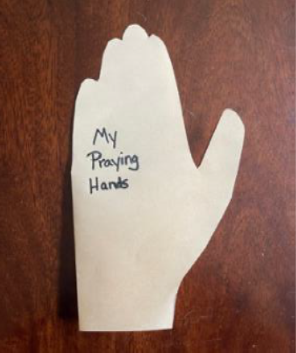
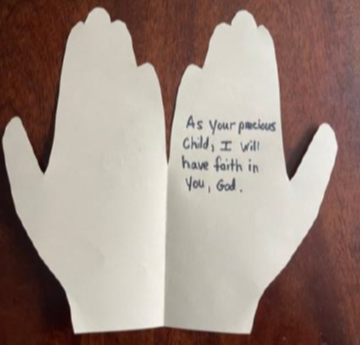
A tapiri i te hoê tuhaa parau paturaa i te afaraa o te hamburger. A tuu i te rima aui o te tamarii e te pinkie i ni'a i te hiti, ma te faatoro amui i ni'a i te mau rima. A tapa'o i to ratou rima e te hoê tapa'o. Tapa'o i to ratou rima, ma te haapapû e, aita te vahi e farerei ai to ratou pinkie i te hiti i peehia. E mea ti'a ia'na ia hamani i te mau rima pure mai te hoho'a te huru.
A papa'i i mua i te mau rima “To'u mau rima pure.” A papa'i i te mau tamarii paari a'e i ta ratou iho pure faaroo i roto. No te mau tamarii apî a'e, a ani ia ratou ia papa'i i te hoê hoho'a pure, ia papa'i i te mau parau pure no ratou, e aore râ, ia papa'i i te mau parau i nene'i-a'ena-hia no ratou ia tapiri i roto i to ratou mau rima pure. Ei hi'oraa: E faaroo vau ia oe, e te Atua, ei ta oe tamarii faufaa roa.
Tapu
A ani i te mau tamarii ia parau faahou i muri ia outou: “E faaroo vau ia oe, e te Atua.” A faaite atu e, e mea ti'a ia ratou ia faahiti faahou i taua parau ra i te mau taime a faatoro ai outou ia ratou. A tai'o i te pure i muri nei:
E te Atua, mauruuru no te mau haamaitairaa nehenehe atoa o teie nei ao. Te maere mau nei au e aita vau i ite i te mau mea fifi o ta outou hamaniraa.
(Tuhaa) E faaroo vau ia oe, e te Atua.
I te tahi mau taime, e teimaha roa vau i te mau mea atoa ta ' u e tia ia rave. Mea rahi noa ta'u e nehenehe e rave.
(Tuhaa) E faaroo vau ia oe, e te Atua.
I te tahi mau taime, e hepohepo vau. E tupu te mau mea ino. Mai te mea ra e, aita e mea maitai.
(Tuhaa) E faaroo vau ia oe, e te Atua.
I te tahi mau taime, aita vau e ite ra eaha ta'u e ti'a ia rave e aore râ, eaha te maitiraa e rave. E nehenehe te oraraa e riro ei mea huru ê roa.
(Tuhaa) E faaroo vau ia oe, e te Atua.
Te tamata nei au i te faaroo ia outou mai ia Aberahama raua Sara. Ua ite au e, o ta outou tamarii faufaa roa vau, no reira...
(Tuhaa) E faaroo vau ia oe, e te Atua.
Amene.